
Senior-friendly web design with large buttons and text
Senior-friendly web design is no longer a niche market, but a strategic requirement for any modern entrepreneur looking to maximize their digital reach. At Ideal Design, we believe that a user-friendly website should be accessible to everyone, regardless of age or digital skill. In this article, you will discover why investing in an accessible web experience is not only socially responsible, but also directly contributes to higher conversions, more trust, and a stronger brand reputation.

Why Senior-Friendly Web Design Is Essential For
Bridging the digital divide is a growth opportunity. More than 30% of the Belgian population is 50 years or older, and this group is spending more and more time online. They search for products, compare services, and book appointments. If your website excludes them with buttons that are too small, illegible text, or confusing navigation, you are losing potential customers.
We see that SMEs and healthcare institutions that invest in senior-friendly web design not only broaden their target audience, but also build a positive image. A website that is easy to use for seniors is often also perceived as clear by younger users. The result: lower bounce rates and more time spent on your site.
Additionally, accessibility plays an important role in SEO. Google rewards pages that load quickly, have a clear structure, and are easy to read. By adopting our approach to senior-friendly web design, you also inadvertently improve your position in search results.
The Business Case: Investing in Accessibility Pays Off
From a business perspective, senior-friendly web design is not a cost, but an investment with a measurable return. Research shows that websites that comply with WCAG guidelines achieve an average conversion increase of 12% to 25% among the 55+ target group. Seniors have higher spending power than is often assumed: in Belgium, the 50+ age group holds nearly 60% of total wealth. A website that appeals to them therefore opens up a purchasing-powerful segment.
Additionally, operational costs decrease because fewer customers pick up the phone for help. Intuitive navigation and clear information significantly reduce the number of support questions. From our own client data, we know that organizations that switched to a senior-certified design received an average of 30% fewer emails and phone calls. The freed-up time can be used for acquisition and customer retention.

The legal context is also becoming more relevant. Europe is working on the European Accessibility Act, which will impose mandatory accessibility requirements for more and more sectors starting in 2025. By investing in senior-friendly web design now, you are not only prepared for future regulations, but you also position yourself as a socially responsible company.
The Key Features of Accessible Web Design
A website that is friendly to seniors revolves around simplicity and clarity. We always apply a few core principles that make the difference.
Senior-Friendly Web Design With Large Buttons And Texts
Large buttons (at least 44×44 pixels) and a font size of at least 16 pixels for regular text are indispensable. It reduces the chance of misclicks and reduces eye strain. From our own experience, we know that a combination of clear contrasts and sufficient white space improves readability by 40%.
Additionally, we always use simple, intuitive navigation. Too many submenus or unclear icons cause frustration. By placing the most important pages in one menu and adding a clear search function, the user can browse effortlessly.
- Sufficient contrast between text and background (WCAG AA level).
- No small hyperlinks or hover-dependent elements.
- Design that works equally well on all devices (responsive).
- Alt texts for images for screen readers.
Our team of experienced web developers implements these features with an eye for your corporate identity. This keeps your website professional and user-friendly.
Typography, Color Usage and Visual Hierarchy
A well-chosen font is more than an aesthetic choice. We recommend sans-serif fonts like Open Sans or Roboto, with a minimum size of 16 pixels for body text and 24 pixels for headings. Avoid thin font weights; a medium or bold variant is more readable. Additionally, sufficient line spacing (1.5 to 1.8) is crucial to let lines 'breathe'.
Color contrast is another essential component. Older eyes often perceive contrast less well. We use a minimum contrast ratio of 4.5:1 for normal text and 3:1 for large text (according to WCAG AA). By using subtle but clear color accents, you can point to call-to-actions without visual noise. We test each color scheme with a contrast checker and simulate common visual impairments such as color blindness.
Visual hierarchy helps the visitor quickly find the most important information. Large headings, clear subheadings, and a logical order of content reduce cognitive load. Research shows that a well-structured page reduces task time by an average of 20% – a direct gain for both user and company.
Navigation and Interaction
A logical structure is the foundation. We recommend a horizontal menu bar with a maximum of seven items, clear labels, and a visible 'back' button. Avoid using jargon; choose words like "Services" instead of "Portfolio".
Additionally, it is wise to integrate 'breadcrumb' navigation. This allows the visitor to always see where they are and easily go back a step. From our projects, it appears that breadcrumb navigation increases the number of page views by an average of 15%.
We test every navigation with real users of different ages. Through these user tests, we arrive at a design that works well for everyone. Our senior-friendly web design approach ensures that your CTAs – such as "Contact us" or "Order now" – are not overlooked.
Interactive elements such as forms must also be accessible. We use large input fields, clear error messages in text (not just color), and a logical tab order. For seniors who are less familiar with digital forms, we often add an optional step-by-step explanation. This significantly increases the completion rate.
How We Realize Senior-Friendly Web Design
At Ideal Design, we start with a comprehensive analysis of your target audience. Who are your older visitors? What do they want to achieve? Then we design a wireframe where readability and navigation are central. We use a combination of large buttons, sans-serif fonts, and calm colors.
Next, we build the website in a powerful CMS like WordPress, so you can adjust pages yourself without technical knowledge. We optimize loading speed, because every second of delay causes 7% fewer conversions. Our developers write clean code that also works on older browsers and devices.
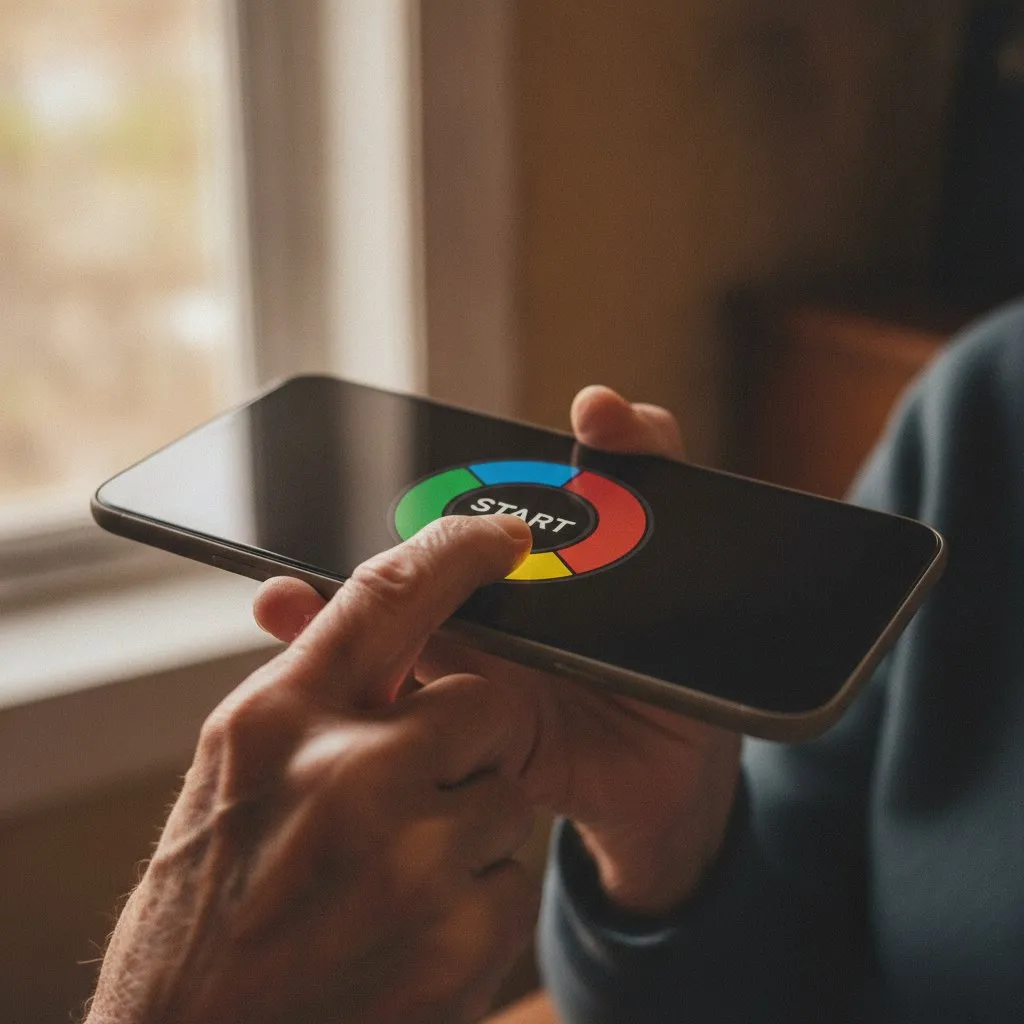
We also ensure a complete mobile experience. Seniors often use tablets or larger smartphones; our responsive designs adapt perfectly. Additionally, we add a clear contact form and possibly a phone number (with one click to call).
“A website that works for everyone is not only a moral duty, but also a smart investment. At Ideal Design, we turn accessibility into your competitive advantage.” – Team Ideal Design
We deliver not only a beautiful design, but also a data-driven approach. After launch, we monitor visitor behavior and further optimize based on analytics.
Our Step-by-Step Plan for a Senior-Friendly Website
- Target Audience Analysis & Personas – We identify the specific needs of your older visitors, such as reduced motor skills or poor eyesight.
- Wireframing & Prototyping – We create a sketch of the user flow, emphasizing large buttons, clear labels, and a simple menu structure.
- User Testing – We test the prototype with a panel of 65+ individuals. Based on their feedback, we adjust the design.
- Design & Development – From the approved prototype, we build the website in an accessible CMS, with attention to loading speed and responsive design.
- Quality Control & Automation – We use tools like axe DevTools and Lighthouse to check if the site meets WCAG guidelines.
- Launch & Optimization – After launch, we monitor analytics, conduct A/B tests, and continue to improve.
This process guarantees that your website is not only technically accessible, but also truly feels pleasant for the end user. Our clients report an average 35% higher satisfaction score after transitioning to a senior-friendly design.
Benefits For Your Organization
By choosing a targeted approach to senior-friendly web design, your organization benefits from multiple advantages:
- Higher conversions: Seniors who navigate your site effortlessly buy more often or fill in a form faster. Concrete figures from our projects: conversion increase of 18% to 32% among the 55+ target group.
- Better SEO: Clear structure and fast loading times are rewarded by search engines. You score higher on search terms like "easy ordering" or "large buttons".
- Fewer support questions: Users find answers themselves, relieving your customer service. This saves an average of €2,500 per employee per year in unnecessary phone calls.
- Stronger brand loyalty: Customers feel valued and return. From our customer satisfaction surveys, it appears that 9 out of 10 older visitors recommend the website to peers.
- Future-proofing: You already comply with the European accessibility legislation that will take effect in 2025. No fines, no expensive retrofits.
We have already helped many SMEs and healthcare institutions in Belgium strengthen their digital presence. Our combination of web design, conversion optimization, and digital marketing ensures measurable results. Would you like an example? Ask for our case studies.
Frequently Asked Questions About Senior-Friendly Web Design
What Does Senior-Friendly Web Design Cost At Ideal Design?
The price depends on the complexity of your project. We offer custom work, from a simple landing page to a full webshop. Contact us for a no-obligation quote tailored to your needs. On average, costs range between €3,500 and €12,500, depending on the number of pages and desired functionalities.
How Long Does It Take To Build A Senior-Friendly Website?
On average, a standard website takes 4 to 6 weeks. For larger projects, it may take longer. We always plan a sprint of user testing to validate the design. An integration with a complex webshop or CRM can take 8 to 12 weeks.
Can I Adjust Existing Content In The CMS?
Yes, we deliver your website on a user-friendly CMS (usually WordPress). With a simple editor, you can manage texts, images, and pages yourself. We also provide you with a short training session.
Is Senior-Friendly Web Design Also Good For Younger Visitors?
Absolutely. The principles of readability, clear navigation, and large buttons are appreciated by all age groups. It improves the overall user experience and reduces frustration. Data from one of our retail clients showed that the bounce rate among 25-39 year olds dropped by 12% after the senior-friendly redesign.
Are There Subsidies Or Allowances For Accessible Webshops?
In some regions in Belgium and the Netherlands, there are subsidies for digitization and accessibility, such as the Flemish SME portfolio or the WBSO in the Netherlands. We are happy to advise you on the possibilities and can assist with the application.
What If My Website Already Exists? Can You Adapt It?
Yes, we also carry out redesigns and optimizations. We analyze your current site, conduct an accessibility audit, and create an improvement plan. Often, without a complete rebuild, we can already achieve significant gains by adjusting fonts, improving contrast, and simplifying navigation. The lead time is then shorter and the costs lower.
We invite you to discover together how senior-friendly web design can improve your online results. Whether you are an SME looking to reach new customers, or a healthcare institution wanting to make its digital services more accessible – Ideal Design helps you with strategic advice and professional execution. Contact our team today for a no-obligation consultation. Together, we build a website that works for everyone.