Custom industry software for your business
Your production planning is in Excel, work orders are still filled out on paper, and the stock in the warehouse doesn't match what the system says. Meanwhile, someone types order data from a spreadsheet into the accounting every Friday afternoon. Does that sound familiar? Then you're not looking for yet another article about what custom work is. You're looking for a guide to having custom software for manufacturing companies built: how to choose a partner, what it costs, and how to roll it out without your machines standing still for a week.
Below you'll go through the entire process, from the first symptoms to aftercare. With concrete questions you ask, trade-offs you make, and an honest cost logic.
Why generic software makes your production process more expensive than custom work
Standard packages are built for the average user. That average manufacturing company doesn't exist. As soon as you work with customer-specific variants, multiple shifts, or a machine park that doesn't match the standard fields, the work starts happening around the package instead of with it.
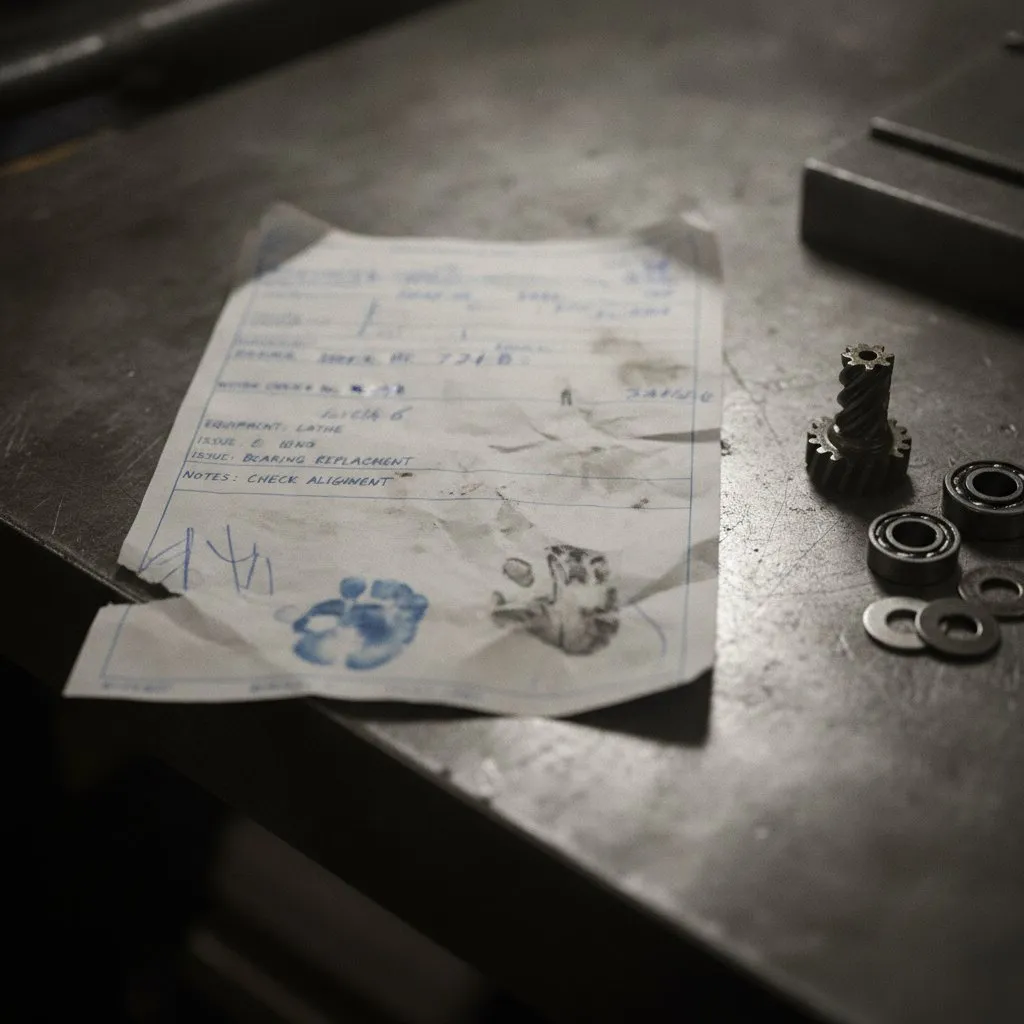
The symptoms are always the same. Double entry between Excel and the accounting. Work orders that follow the shop floor on paper and are retyped in the evening. Stock that matches on the computer but not on the shelf. And hours lost to manual order overviews that nobody actually reads.
Do the math. Five employees who each spend six hours a week on manual retyping comes to about 1,560 hours per year. That's almost a full-time employee who spends nothing on production or sales. Add to that the errors that arise from retyping and the search for the right version of a file.
The real cost of manual processes
The visible cost is the labor cost of that retyping. The invisible cost is greater: decisions made too late because figures only add up a week later, deliveries that shift because the stock isn't reliable, and customers who ask for a correction because the order was passed on incorrectly.
When standard software is sufficient
Honestly: not every process requires custom work. Accounting, payroll administration, and general office software are better bought standard. That's mature software with legislation that is continuously maintained. Custom work begins where your process makes the difference: order intake, work preparation, quality, and delivery.
The trade-off is clear. Custom work requires a one-time investment and a correct process description in advance. A standard package starts faster but continues to demand workarounds from your people for years.
Which production processes lend themselves first to custom software
Start with processes with a lot of repetition and few exceptions. That's where the gain is greatest and the complexity is lowest. Order intake, work orders, inventory management, quality control, and delivery planning are the classic candidates.
Then link the logistics chain. Automation of order processing, stock management, and delivery notes ensures that the administration follows the shop floor instead of lagging behind. A delivery note that is automatically created the moment an order is completed not only saves time but also prevents discussions with customers.
Then have machines and sensors send data via API integrations to a dashboard. Downtime, waste, and cycle times then become measurable per line. That's the moment when you no longer decide on gut feeling which machine needs maintenance.
Quick wins on the shop floor
- Digital work orders that operators fill out on a tablet, with status updates per step.
- Automatic stock mutation upon consumption of raw materials.
- Order confirmation that is automatically sent to the customer as soon as the order is entered.
Processes you leave alone for now
Anything that happens only a few times a year rarely deserves its own module in the first phase. Processes that are still fully in flux are also better stabilized first. And if a process mainly exists because a previous supplier set it up that way, that's not a good starting point.
Limit the scope of the first phase to one department or one production line. Starting too broadly is the most common reason a custom project is delayed. Anyone who wants to digitalize the entire company at once is still in meetings after six months.
How to select a custom software builder who understands your sector

Most suppliers can build an application. The question is whether they understand your production environment. Ask for concrete production or sector references and for existing systems such as CRM and ERP integrations. A portfolio with beautiful websites says nothing about the ability to understand a work order flow.
Test the technical stack. If a partner works with .NET, C#, Java or Kotlin, Swift, React Native and JavaScript or TypeScript, then web, Windows, and mobile apps can stay within one partner. That prevents you from having to find a separate supplier for each application who then can't talk to the others.
Check whether the partner also provides hosting, SSL certificates, and maintenance. Otherwise, after launch you'll be stuck with a separate supplier per problem: one for the server, one for the certificate, one for the app, and one for the integration.
Questions you ask during the first conversation
- How many customers in the manufacturing industry have you already guided, and what was their biggest stumbling block?
- How do you approach an integration with a system whose supplier doesn't release any documentation?
- Who is my fixed point of contact during the project, and who during the support afterward?
- What happens if a phase is delayed due to a mistake on your end?
Red flags with a software partner
A vague quote without phasing. Not a single reference you can call yourself. An answer that takes days even before you're a customer. And a partner who promises that everything will work perfectly without having seen your shop floor.
Demand an answer within 24 hours with a clear proposal and a no-obligation price quote. A slow or vague response usually predicts a slow project. At BWCreative, our agency in Anderlecht, we apply that response time because a fast, clear response is the first test of how a project will go.
You can read more about how we approach software projects on our page about innovative software that transforms your company.
From process analysis to working application: the four phases of a custom project
A solid process runs in four phases. Each phase has its own goal and its own completion, so you know where you stand at every moment.
- Research and data collection. Together you map out existing work instructions, Excel files, and machine output. This makes clear which steps are really necessary and which exist only because they've always been done that way.
- Planning. Priorities, milestones, and a phased rollout that doesn't halt production, with a defined scope per phase.
- Design and coding. Web and mobile apps for iOS and Android, Windows applications for the shop floor, and Chrome extensions where that works faster than a full application.
- Testing and launch. Testing with real orders and real employees before the full rollout, then training and support.
What you provide yourself for a smooth start
The more concrete your input, the faster the process. Before the start, collect: examples of completed work orders, the Excel files currently being used, a list of the machines and their output format, and the names of the systems that need to be integrated. One employee per department who really knows the process is worth more than ten pages of theory.
Why testing with real orders makes the difference
A demo with made-up data always looks good. The real test is an order with an exception: a customer who wants a different size, a delivery date that shifts, a missing raw material. Run that test with the people who will use the system daily, not with the project group. They find the problems that nobody had foreseen.
If you want to first look more broadly at why custom work helps your company move forward, read why custom software lets your company grow.
Integrations that a manufacturing company really needs
An application that stands on an island solves nothing. The value is in the connections with what you already use.
- Accounting and ERP integrations via API, so that orders, invoices, and stock mutations aren't entered twice.
- Machine and scanner integration: barcodes, work order printers, and production labels directly from the application.
- A mobile app for the shop floor: status updates, photos of finished pieces, and quality reports without walking to a desk.
- A cloud solution with roles and permissions: the business owner sees figures, the foreman sees planning, the operator sees only their tasks.
What you do if a supplier doesn't have an API
That happens more often than you think, especially with older ERP packages. Options include an export file that is periodically imported, a connector via a database view, or an intermediate layer that automates the supplier's screen. None of the options is elegant, but a good partner honestly says which is reliable and which can break with every update.
Security and access rights on the shop floor
On the shop floor, nobody likes working with long passwords. Yet you don't want every operator to see the sales prices. So work with simple login via badge or PIN code, with roles that determine what is visible. For externals, such as an accountant or a customer, there are separate accesses with limited rights.
You can find more about how we set up this kind of integration and security layer via Webdesign & Software Ontwikkeling België - BWCreative.
What having custom software developed costs and how you justify the investment
There are no fixed prices for custom work. Every project is quoted individually based on scope, integrations, and number of users. Anyone who quotes you a fixed package price without knowing your process is guessing at what you need.
Always ask for a free and no-obligation quote with a broken-down price per phase. That way you can decide in phases and adjust after phase one without having to justify the entire budget.
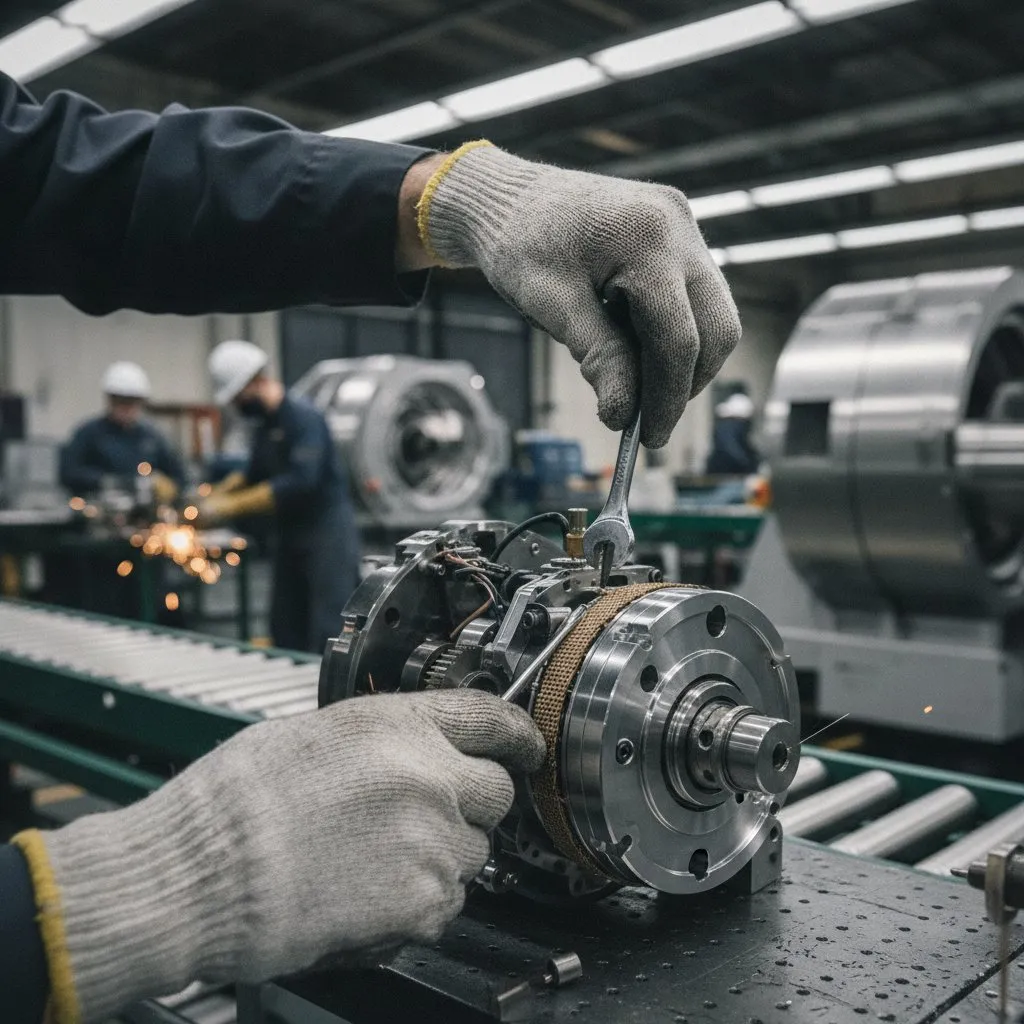
Calculate the payback period based on hours saved, fewer errors in stock, and a faster order lead time. Not just on the purchase price. A solution that saves 800 hours per year pays for itself within a period you can calculate in advance. Also make the distinction between one-time development and ongoing costs for hosting, maintenance, and support.
Why a fixed package price is rarely right
A fixed price usually means the supplier has left out the complexity. Or that they will invoice it later as an "extra." With custom work, the value lies precisely in the parts that aren't standard: the exception in your order flow, the integration with that one machine, the reporting your foreman needs.
How to compare a quote between two partners
| Element | What you look at |
|---|---|
| Phasing | Is the project divided into phases that can be decided on separately? |
| Integrations | Are the integrations with accounting, ERP, and machines explicitly included? |
| Maintenance | Are hosting, SSL, and support listed as a separate, transparent line? |
| Ownership | What happens to the code and the data if the collaboration ends? |
Still unsure whether to choose custom work or a template solution? Then read why a template website costs your company opportunities for the broader consideration.
Letting your custom solution grow without rebuilding everything
A good first version is not an endpoint. From the start, provide a data model and an API layer that can accommodate new modules, such as a quality module or a customer portal. Then you add functionality later without reworking the foundation.
Use existing in-house products as a starting point where they fit. BwAgenda for appointments, Volantis for e-commerce, or a booking system if your planning resembles that. That saves months of development.
Plan a fixed maintenance and improvement cycle instead of major rebuild projects every few years. Keep the documentation and process description up to date, so that a new employee or external partner can continue building. That is often the difference between a solution that lasts five years and one that is replaced after two.
From first version to full-fledged platform
Start with the core: orders, work orders, and stock. Then add reporting, then quality, and only in a later phase a customer portal. Each module builds on the previous one.
Maintenance and support after launch
Count on ongoing support for updates, security patches, and small adjustments. A production environment changes continuously: new customers, new machines, new requirements. Your software must be able to follow that.
FAQ
What does having custom software developed cost for a manufacturing company?
There is no fixed rate. The price depends on the scope, the number of integrations, and the number of users. Ask for a free and no-obligation quote with a broken-down price per phase, so you can decide step by step and calculate the payback period per phase.
How long does custom software development take to be finished?
That follows the same logic: no fixed term without a concrete scope. A defined first phase for one department is of course finished faster than a full rollout across the entire company. That's why we work with a phased planning and clear milestones per phase.
Can I have custom software built that integrates with my existing accounting or ERP?
Yes, via API integrations. If your supplier doesn't have an API, there are alternatives such as export files or an intermediate layer. A good partner looks at each system to determine what is reliable and what can break with an update.
What is the difference between custom software and a standard package for production?
A standard package forces your people into a fixed way of working. Custom work follows your machine park, shifts, and customer-specific variants. The difference is mainly in the years afterward: with custom work, the software works like your process; with a package, your process works like the software.
Can I have custom software made in phases, so that production keeps running?
Yes, and that is the approach we recommend. Each phase has a defined scope and its own testing moment with real orders. That way production keeps running while the new solution is put into use step by step.
Would you like to know what is possible for your production process? Call or send a message to Webdesign & Software Ontwikkeling België - BWCreative via +32 465 333 573 (phone and WhatsApp), or email info@idealdesign.com. We are reachable from Monday to Friday between 09:00 and 18:00 and respond within 24 hours with a clear proposal and a no-obligation price quote. Our agency is located at Rue de l'Orphelinat 115, 1070 Anderlecht, Brussels.