
Image Optimization for Faster Sites
Image optimization for loading speed is one of the most underestimated factors for the success of a modern website. When visitors have to wait longer than a few seconds, they leave – often without returning. At Ideal Design, we see daily how brands sabotage their growth with heavy, unprocessed images.
Our experience in web design and software development teaches us that a fast site not only improves the user experience, but also significantly increases conversion and SEO. In this article, we dive deep into the techniques that make your website lightning fast, without sacrificing visual quality. From a business perspective, we look at why every millisecond counts and how targeted optimizations can realize a direct return on investment. We focus on measurable results: higher conversion rates, lower bounce rates, better Google ranking, and a sustainable competitive advantage.
Here you will read not only about theory, but about practical, proven methods that Ideal Design uses daily for clients in Belgium and beyond. Whether you manage an online store, maintain a corporate site, or present a portfolio, the principles of image optimization for loading speed are universally applicable. Let's start at the core: why speed is decisive for your business results.

Why Image Optimization for Loading Speed Is Crucial

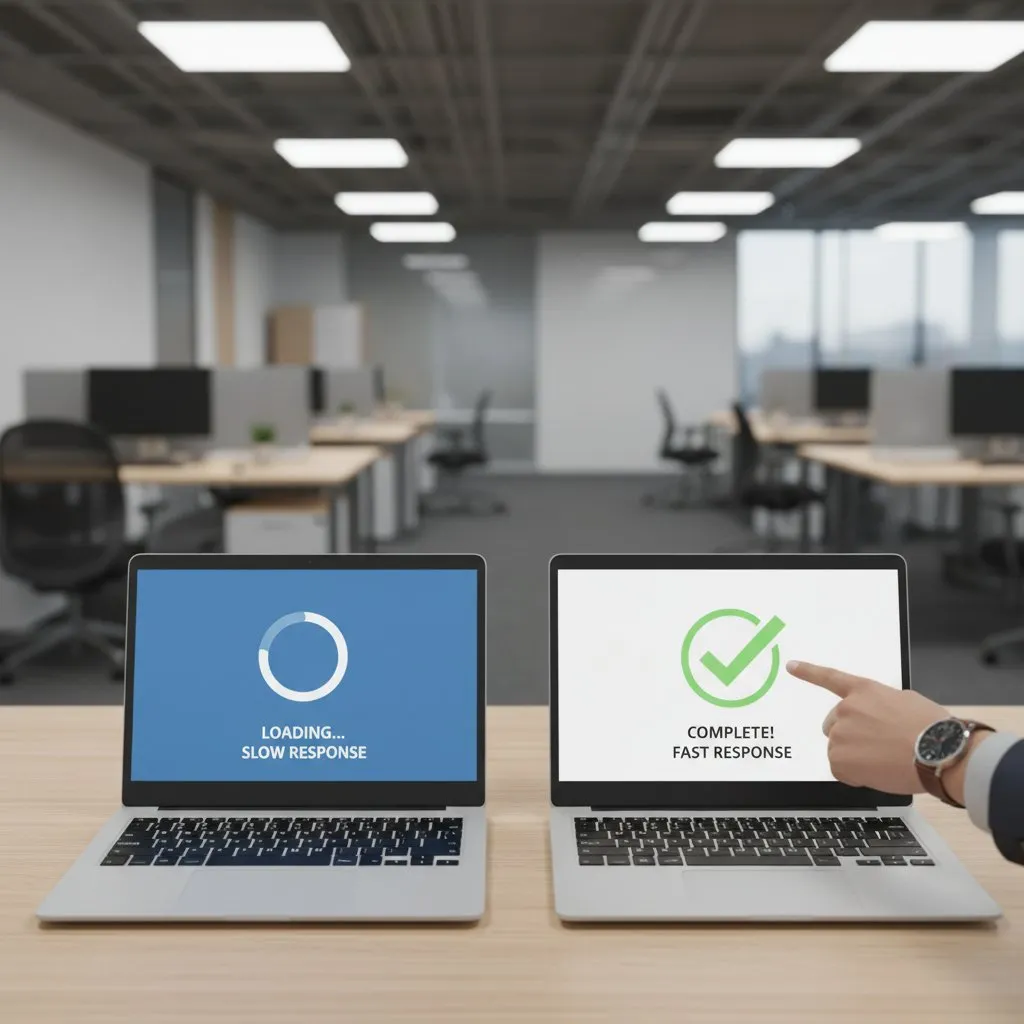
The speed of your website determines whether a visitor becomes a customer or drops off. Research shows that 53% of mobile users leave a site that takes longer than three seconds to load. Images are often the biggest culprit: they account for an average of 60% of the total page weight. Without image optimization for loading speed, every visitor is confronted with a slow, frustrating experience.
At Ideal Design, we make speed a core part of our web design process. We know that a fraction of a second can be the difference between a conversion and a bounce. That's why we apply advanced compression, intelligent formats, and responsive loading. This ensures that your website is not only beautiful, but also loads lightning fast – regardless of the device or network connection.
Companies that invest in image optimization for loading speed see a direct increase in engagement. Lower bounce rates, longer session durations, and higher conversion rates are no coincidence. They are the result of a well-thought-out technical strategy. Our clients in Belgium experience this themselves: their webshops and business sites perform better than ever. A concrete example: an Antwerp e-commerce client saw the average loading time drop from 5.3 to 1.8 seconds after optimization, leading to a revenue increase of 14% within two months. This is not an exception – it is the reality of well-executed image optimization.
Additionally, speed has a direct effect on the perception of your brand. A slow site comes across as unprofessional and unreliable. Potential customers associate long loading times with poor service. By investing in image optimization for loading speed, you send a signal of quality and commitment to user experience. This strengthens your brand image and encourages repeat visits.
The Techniques Behind Professional Image Optimization
There are several ways to optimize images without losing quality. A few proven methods that Ideal Design applies:
- Lossless compression: removing unnecessary metadata and reducing files by up to 50% without visible difference. This is the basis of any optimization and immediately yields substantial gains.
- Next-gen formats (WebP, AVIF): these formats offer up to 30% better compression than JPEG or PNG, ideal for image optimization for loading speed. AVIF can deliver up to 50% smaller files compared to JPEG, with superior image quality. We systematically convert your existing library to these formats while maintaining fallbacks for older browsers.
- Responsive images: using the `srcset` attribute, we serve the correct resolution per screen size, so mobile users don't load 4K images. This prevents unnecessary data usage and significantly speeds up loading time. We also implement `sizes` attributes to tell the browser exactly which version to load.
- Lazy loading: images only load when they come into view. This saves up to 40% initial loading time on pages with many visuals. We combine native lazy loading (`loading="lazy"`) with a JavaScript fallback for maximum compatibility.
- CDN and caching: via a Content Delivery Network, optimized images are delivered quickly, regardless of the user's location. We configure edge caching with long expiration times, so returning visitors experience virtually no loading time.
- Server-side optimization: automatic conversion upon upload, integrated compression, and dynamic size adjustment via an image processing API. This reduces management overhead and guarantees consistent quality.
Each technique contributes to a faster, lighter website. We combine these methods in a custom workflow. This keeps your site fast, secure, and scalable. Our approach is modular: we start with an audit of your current image material, measure performance, and then implement the combination of techniques that best suits your specific situation. For a news website with many photos, for example, we focus on lazy loading and WebP, while a product catalog benefits more from responsive image sets and CDN distribution.
Would you like to know which combination works best for your business? Our experts analyze your current image material and create an optimization plan that perfectly aligns with your goals. We provide you with a clear roadmap with expected time savings and impact on your KPIs.
How Image Optimization for Loading Speed Strengthens Your SEO
Google uses loading speed as a ranking factor, especially for mobile searches. Since the Core Web Vitals update, image optimization for loading speed has become a direct SEO link. A slow site receives fewer visitors via organic traffic, while competitors with a fast site rank higher. Core metrics like Largest Contentful Paint (LCP), First Input Delay (FID), and Cumulative Layout Shift (CLS) are strongly influenced by how images are loaded. LCP, for example, is dominated by hero images; optimizing these yields quick gains.
At Ideal Design, we integrate speed into every SEO strategy. We optimize images not only for visual impact, but also for indexability. That means: correct alt texts, structured data for images, and a high-performance CDN. The result? Better positions in image search, faster page loading, and a higher click-through rate. Additionally, we reduce the number of HTTP requests by combining icons and small images into CSS sprites or inline SVGs, which further improves page speed and indirectly strengthens SEO.
“A website that loads in less than 2 seconds has an average conversion rate 2.5 times higher than a site that takes 5 seconds.” – Data from multiple speed studies (Akamai, Google, Think with Google)
Moreover, image optimization for loading speed improves the user experience, which positively influences signals like dwell time and bounce rate. Google rewards this. Our approach combines technical SEO with creative web design, so your site both scores and delights. Speed is also essential for local SEO: a fast mobile site ranks better in local pack results, directly leading to more phone calls and physical visits for Belgian businesses.
We continuously monitor your site's Core Web Vitals and report monthly. This way, you know exactly the impact of image optimization on your organic positions. Clients of Ideal Design saw an average increase of 22% in organic traffic within three months after implementing a complete image optimization with CDN integration.
Practical Steps for a Faster Website
You don't need to be a technical expert to get started. Here are immediately applicable tips from our designers:
- Use tools like TinyPNG or Squoosh to compress images before upload. Set a maximum file size per page type, for example 70 KB for blog images and 120 KB for product photos.
- Limit the number of images per page. Choose the most impactful visuals and consider stock image alternatives that are already optimized.
- Set a maximum number of kilobytes for each image (e.g., 100 KB for a hero image, 50 KB for thumbnails). Use a tool for bulk conversion.
- Implement lazy loading via a WordPress plugin (e.g., WP Rocket or Autoptimize) or manual code with the `loading="lazy"` attribute. Don't forget to exclude critical above-the-fold images.
- Test your site regularly with Google PageSpeed Insights or GTmetrix. Aim for a score of at least 90 on mobile. Pay specific attention to the LCP value (under 2.5 seconds).
- Consider server-side optimization like brotli compression and HTTP/2 or HTTP/3 for faster delivery of assets.
These steps are simple, but the real difference lies in the finesse. At Ideal Design, we go further: we analyze every byte, apply advanced compression algorithms, and implement server-side optimizations. This achieves performance that generic plugins cannot match. Think of intelligently managing srcset breakpoints or automatically generating WebP via a CDN that detects the browser.
Do you have an online store or a portfolio site? Then image optimization for loading speed is even more crucial. E-commerce pages with many product photos benefit enormously from our approach. We help you increase your conversion by leveraging every millisecond of gain. An additional advantage: lower server costs because smaller files consume less bandwidth and storage. Your hosting bill can decrease while performance increases.
Why Choose Ideal Design As Your Partner?
We are not a standard web design agency. Our specialists unite design, UX, and software development under one roof. As a Belgian company, we understand the local market, but our methods are internationally applicable. Our approach to image optimization for loading speed is thoroughly tested and continuously improved through dozens of projects ranging from small business websites to large e-commerce platforms with millions of visitors per month.
- We use our own optimization standards that go beyond basic plugins. Our compression engine analyzes the image content and adjusts the optimal quality per region or object, without the human eye noticing a difference.
- Our UX optimization ensures that speed goes hand in hand with ease of use. We prevent, for example, lazy loading from disrupting the scrolling experience or WebP images from showing white spaces in some browsers.
- We offer maintenance contracts for ongoing performance monitoring. You receive a monthly report with loading time, Core Web Vitals, and recommendations for new images. This keeps your site fast for years.
- Our SEO services integrate speed as a fixed part of every campaign. We conduct structured data audits, optimize alt texts, and ensure seamless CDN integration.
- We work with a transparent pricing structure and provide a clear estimate of achievable improvements upfront. No surprises afterwards.
When you work with us, you get a fast, beautiful website that actually delivers results. No empty promises, but measurable improvements in loading time, SEO, and conversion. Our references are available; we guarantee an average loading time reduction of 50% or more.
Are you ready to speed up your website? Contact us for a free speed analysis and discover what image optimization for loading speed can mean for your business. We are happy to visit for a no-obligation consultation – physically anywhere in Belgium or digitally.
Frequently Asked Questions About Image Optimization for Loading Speed
What Exactly Is Image Optimization for Loading Speed?
Image optimization for loading speed refers to the process of reducing, compressing, and intelligently loading images to minimize the loading time of a web page. It includes techniques such as format selection, responsive images, lazy loading, caching, and server-side conversion. At Ideal Design, we apply this without sacrificing visual quality. The goal is to reduce file size, decrease the number of HTTP requests, and speed up delivery, while the visual experience remains unchanged or even improves.
How Fast Can My Website Become After Optimization?
The gain depends on your current situation. On average, we can reduce loading time by 40% to 60% through image optimization for loading speed. Some clients even see an improvement of 80% after we remove unnecessary images and use next-gen formats. We measure before and after with real-world tests via Lighthouse, WebPageTest, and actual usage data from Google Analytics. A typical project result: from 4.2 seconds to 1.8 seconds (mobile). This is not one-size-fits-all; we give you a concrete projection based on a baseline measurement.
Is Image Optimization Important for Mobile Users?
Absolutely. Mobile networks are often slower and have limited bandwidth. By implementing image optimization for loading speed, you ensure that mobile visitors get the same rich experience without long loading times. Google gives extra weight to mobile speed in ranking, so it's a must for any modern site. In Belgium, more than 70% of consumers surf on mobile. If your site loads slowly on a 4G connection, you lose a large part of your potential market. Moreover, mobile speed is essential for advertising campaigns: higher quality scores in Google Ads with fast landing pages lower your cost per click.
Can I Do This Myself or Do I Need an Expert?
Basic optimization you can do yourself with online tools. But for maximum impact, compatibility with CMS systems, and advanced techniques (such as WebP conversion, CDN integration, dynamic `srcset` generation, and server-side caching), professional guidance is recommended. Ideal Design helps you harness the full potential of image optimization for loading speed, without risks of visual damage or incorrect configurations. We ensure that optimizations have no negative side effects, such as layout shifts or broken display in older browsers. Additionally, we save you time: what you try to figure out in a weekend, we solve in a day with a proven workflow.
How Long Does It Take to See Results?
Most optimizations are noticeable immediately after implementation. Lazy loading and compression work instantly. CDN configuration can take a few hours for global propagation. We measure the results within 24 hours and report the improvements. You will often see the impact on loading time, conversion, and SEO in your analytics within one to two weeks. For large webshops with thousands of product photos, full implementation can take a few days, but each phase yields measurable gains.
We believe every millisecond counts. Whether you have a new website designed or optimize an existing site, image optimization for loading speed is an investment that pays back double. Ready to speed up? Contact us without obligation. Our team of web designers, UX specialists, and SEO experts is ready to take your online presence to the next level.
Next step: Want to apply this to your own site? See how our professional website design service works, from first sketch to launch. Read also: Optimize Website Speed for Better Conversions and Improve Your Site With Chatbot Integration.