
Strategic Graphic Design Define and Grow Your Brand
In today's visually saturated world, where consumers are bombarded with advertisements, messages, and images every second, the ability to make a sincere and lasting impression is invaluable. How do you ensure that your company is not just background noise, but sends out a clear and recognizable signal? The answer lies in the thoughtful application of graphic design. This is much more than just creating “pretty pictures”; it is the art and science of visual communication, a strategic tool that translates the essence of your brand into a tangible, visual language. Effective design builds a bridge between your business and your ideal customer, creates a sense of trust and professionalism, and lays the foundation for a strong brand identity. You can find inspiration on our homepage and see how a cohesive design forms the core of a compelling online presence.
More Than Pretty: The Invisible Pillars of Visual Communication
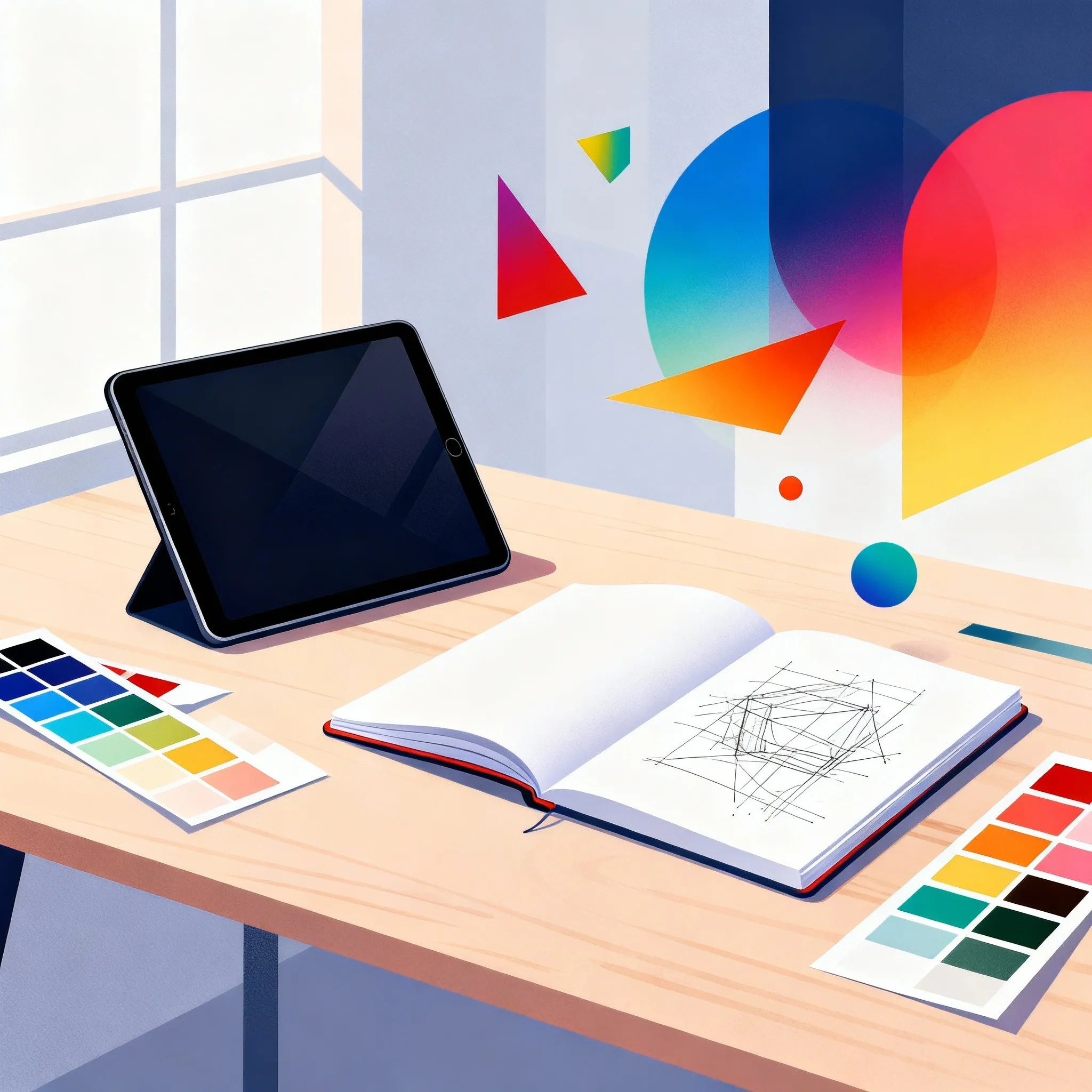 The true power of graphic design lies not in what you see at first glance, but in the invisible strategy and psychology behind it. A professional design is a carefully constructed system in which every element—from color and font to the empty space on the page—plays a specific role in conveying your message and evoking the desired emotion. It is the difference between a random collection of visual elements and a harmonious whole that tells a coherent and compelling story. This strategic approach ensures that your visual communication is not only aesthetically appealing, but also functional and purposeful. It transforms passive viewers into active, engaged customers by intuitively guiding them through your message and convincing them of the value you have to offer. Understanding these deeper layers is essential to harnessing the full potential of design as a powerful business tool. The Visual Ecosystem: Foundation of a Strong Brand Identity
When most people think of graphic design, they think of a logo. While a logo is undoubtedly a crucial part, it is only the tip of the iceberg. An effective brand identity is a complete visual ecosystem, a family of cohesive elements that work together to create a consistent and recognizable experience. This ecosystem includes a carefully chosen color palette that reflects the brand's personality, a set of fonts (typography) that define the brand's voice, and a clear style for photography and iconography. Think of it as a symphony orchestra: the logo may be the first violin, but without the supporting harmony of the cellos (colors), the rhythm of the percussion (typography), and the atmosphere of the wind instruments (visual style), the music is incomplete and chaotic. A professional designer acts as the conductor of this orchestra. The task is not only to create each element, but also to establish guidelines (often in a style guide) that ensure that every piece of communication, from a business card to a complex website, speaks the same visual language. This consistency is the holy grail of branding. It breeds recognition and, over time, builds enormous capital in trust. When customers encounter your brand in different places and it always looks and feels the same, it creates a sense of reliability and professionalism. An inconsistent visual identity, on the other hand, sows confusion and undermines your company's credibility before you've even said a word.
The Silent Message: Psychology of Color, Shape, and Space
 Graphic design is essentially a form of applied psychology. Designers make conscious choices to evoke specific emotions and associations that guide the perception of a brand. Color is the most obvious and powerful tool in this regard. The choice of blue in the financial and technology sectors is no coincidence; it communicates trust, stability, and intelligence. Green is universally associated with nature, sustainability, and health, making it perfect for organic products or environmentally friendly initiatives. Red can signal urgency, excitement, and passion, and is often used for sale buttons or in the fast food industry to stimulate appetite. But it goes beyond the basic colors. The hue, saturation, and brightness of a color determine its nuance. A muted, earthy green feels very different from a bright, neon green. A professional designer will put together a palette that not only suits the industry but also the specific personality of the brand. In addition to color, shape also plays a crucial role. Round, organic shapes often feel friendly, soft, and accessible, while sharp, angular, and geometric shapes can convey strength, precision, and efficiency. Think of the soft, rounded logo of a daycare center versus the angular, stable logo of an architectural firm. Even empty space (white space) is an active design element. Generous white space creates a sense of luxury, calm, and focus, while a busy, crowded page can feel cheap and overwhelming. By strategically combining these psychological principles, a designer builds a visual experience that subconsciously communicates the right message and evokes the desired feelings in the target audience.
Typography: The Audible Voice of Your Written Word
If graphic design is a language, then typography is the voice with which that language is spoken. The choice of font has a profound impact on how your message is received and what personality your brand conveys. It is the difference between whispering and shouting, between speaking with a friendly smile or an authoritative frown. Traditionally, a distinction is made between serif fonts and sans-serif fonts. Serif fonts, with their small “feet” at the ends of the letters, have a classic, formal, and authoritative look. They are often used by law firms, universities, and newspapers to convey a sense of tradition, reliability, and intellect. Sans-serif fonts, with their clean and modern lines, often feel more accessible, cleaner, and more contemporary. They are the standard choice for tech startups, lifestyle brands, and any organization that wants to strike a direct, no-nonsense, and friendly tone. But the choice doesn't stop there. Within each category, there are thousands of variations. A designer also considers readability on different screen sizes, how fonts combine, and how a visual hierarchy can be created. By using different weights (light, regular, bold) and sizes, the reader's eye is naturally guided through the text. Headings attract attention, subheadings provide structure, and the body text is comfortable to read. Poor typography can completely ruin a beautiful design. It makes text difficult to read, looks unprofessional, and creates unconscious friction for the reader. Good typography, on the other hand, reinforces the message, improves the user experience, and gives your brand a consistent and recognizable voice in all your communications.
Design in Practice: From Marketing to User Experience
The true value of strategic graphic design becomes apparent when it is applied in practice. It is the common thread that connects all customer touchpoints and ensures a seamless and professional brand experience. Take your marketing materials, for example. Whether it's a digital banner ad, a printed brochure, a social media post, or the lettering on a company vehicle, consistent design ensures that your brand is instantly recognizable. It reinforces the impact of each individual marketing effort, as every communication contributes to overall brand awareness. Without a consistent corporate identity, your marketing expenditures are fragmented and do not build cumulative value. In the digital world, the role of graphic design is even more crucial. On a website or in a mobile application, the design is the user experience (UX). A good layout, clear icons, intuitive navigation, and well-placed call-to-action buttons are all the result of thoughtful design decisions. The goal is to guide the user to their goal as effortlessly as possible. A cluttered, illogical interface leads to frustration and visitors leaving. A sleek, intuitive, and aesthetically pleasing interface, on the other hand, creates a positive experience that increases trust in your brand and significantly increases the chance of conversion (a purchase, a contact request). Graphic design is therefore not decoration, but the architecture of the user journey. It determines how information is structured, how actions are presented, and how the user feels when interacting with your company. An investment in professional design is therefore a direct investment in better marketing results and higher customer satisfaction.
The conclusion is clear: graphic design is a fundamental and strategic pillar of any successful business. It is the visual translation of your mission, the driving force behind your brand recognition, and a crucial factor in winning the trust of your customers. It is the investment that makes the difference between blending in with the crowd and standing out as a leader in your field. Are you ready to fully leverage the visual power of your brand and take your business to the next level?
Give your business the professional look it deserves. Discover what strategic design can do for your growth. Request a free quote today and take the first step toward an unforgettable visual identity.
Yes, I would like a free quote for strategic graphic design!