A/B Testing for Higher Conversions
A/B testing for higher conversions is one of the most effective methods to optimize your website. As a data-driven web design agency, we at Ideal Design know that every click counts. By systematically comparing two versions of a page or element, you discover what truly works for your visitors. In this article, you will learn how to improve your conversion rate with A/B testing – without guesswork.
In today's competitive online market, every percentage point increase in conversion is directly reflected in your revenue. Where traditional marketing campaigns often require significant investment for an uncertain outcome, A/B testing offers a measurable and predictable way to increase your return. For SMEs looking to make the most of their budget, this method is one of the fastest ways to achieve a positive ROI, especially in the world of A/B testing for higher conversions. By testing small adjustments – such as the text on a button or the order of your product images – you can significantly increase the effectiveness of your website without expensive campaigns.
Additionally, A/B testing provides a wealth of insights into your target audience's behavior. You not only learn what works, but also why it works. This insight allows you to continuously refine your marketing message, product offering, and customer journey. In the long term, this results in higher customer satisfaction, more repeat purchases, and stronger brand loyalty. In short, A/B testing for higher conversions is not just an optimization technique, but a strategic investment in your online growth.
A/B Testing For Higher Conversions
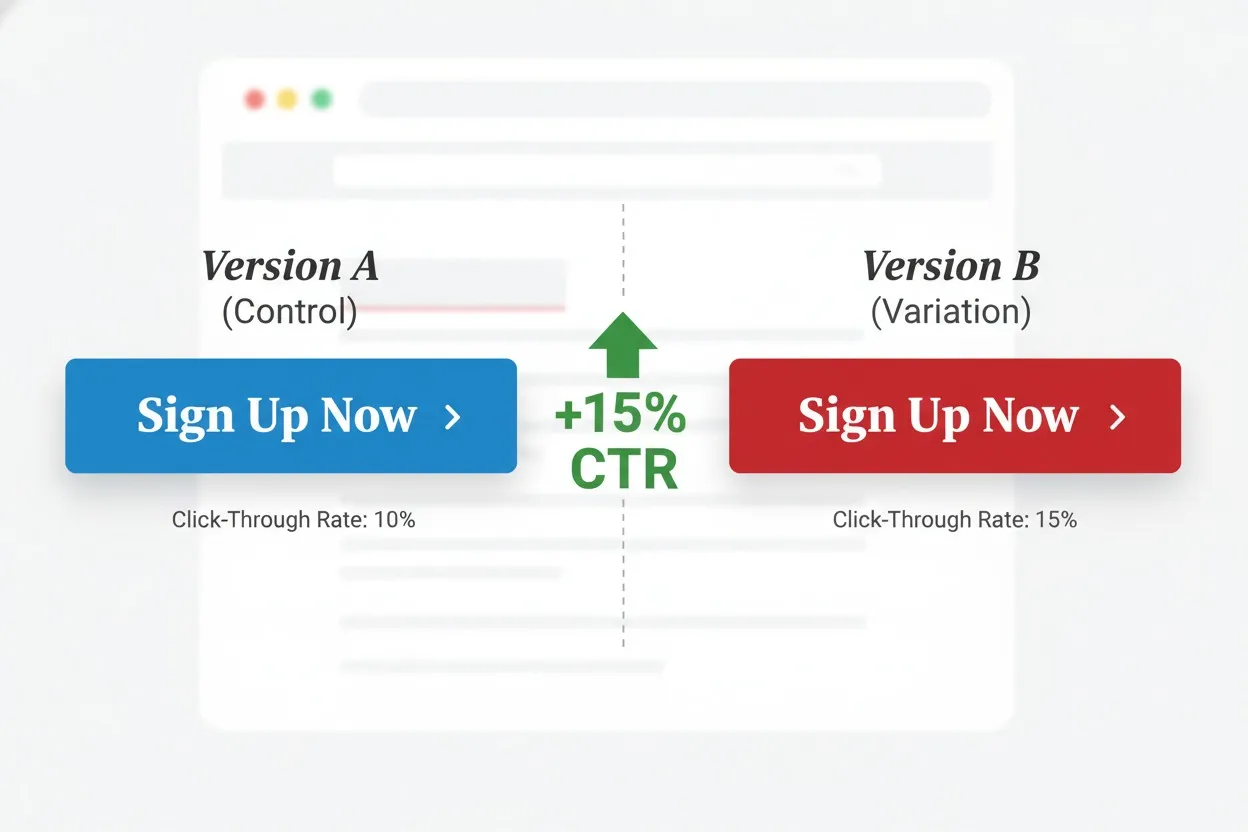
What does A/B testing for higher conversions entail exactly? Simply put: you create two variants of a web page, email, or call-to-action button. Half of your visitors see version A (the control), the other half sees version B (the variant). By measuring which version generates more conversions – such as purchases, sign-ups, or quote requests – you get objective data on what appeals to your audience.
This approach is based on psychologically informed web design. Small adjustments – such as the color of a button, the text of a heading, or the placement of an image – can make a significant difference. Even a subtle change can increase conversion by tens of percent, without additional traffic or marketing spend.
We apply this technique for SMEs looking to improve their online presence. Whether you run an online store or manage a service-oriented site, A/B testing for higher conversions offers concrete tools to maximize your results.
Why Is A/B Testing Indispensable?
Many entrepreneurs rely on their gut feeling when designing a website. But what the owner finds appealing may not be effective for the visitor. A/B testing replaces assumptions with facts.
- Data saves money – You only invest in changes proven to work.
- You optimize for real users, not for yourself.
- Continuous improvement leads to ever-higher conversions, month after month.
- The risk of costly mistakes decreases significantly.
Moreover, this approach aligns seamlessly with UX optimization. By understanding where visitors drop off, we can improve the customer journey. A structured A/B testing process is the engine of any successful optimization strategy. For SMEs wanting to stay competitive, this is not a luxury but a necessity.
At Ideal Design, we combine A/B testing for higher conversions with deep insight into user behavior. This ensures that every adjustment makes a measurable contribution to your business goals.
From a business perspective, the greatest value of A/B testing lies in risk management. Instead of launching a complete website redesign and hoping for the best, you can validate each change with targeted tests first. This means you don't have to allocate large budgets all at once but can optimize step by step. Furthermore, this approach ensures your marketing department can substantiate why certain design choices are made with concrete data – a powerful argument in strategic conversations with stakeholders and management.
How Do You Conduct an A/B Test?
A good A/B test starts with a clear hypothesis. Suppose you think a green 'Order Now' button performs better than a red one. Then you create two versions of that page and randomly split the traffic. After enough visitors (at least a few hundred per variant), you compare the conversion rates.
Important steps:
- Define one measurable goal – for example, the number of newsletter sign-ups.
- Change only one element at a time; otherwise, you won't know what caused the effect.
- Ensure your test is statistically significant – use a tool like Google Optimize or VWO.
- Analyze the results and implement the winning variant.
This sounds simple, but practice can be tricky. Mistakes like too small sample sizes or too many variables lead to incorrect conclusions. Therefore, we advise SMEs to have A/B testing for higher conversions professionally guided.
We manage the entire process: from hypothesis formation to implementation and reporting. This way, you can be sure your optimizations are scientifically grounded.
Additionally, it is essential to establish clear KPIs beforehand. Which conversion do you specifically want to increase? Is it the average order value, the number of leads, or the click-through rate? By specifying this for each test, you avoid having to weigh different indicators against each other afterward. At Ideal Design, we work with a standardized test template where we document the business case, expected impact, and required sample size. This gives you, as an entrepreneur, full transparency and control over the optimization process.
“A/B testing is not a one-time action, but a continuous learning process. Each test provides insight that helps you align your website even better with your customers.” – Team Ideal Design
Common Mistakes in A/B Testing
Even experienced marketers fall into traps. The most common ones are:
- Stopping tests too early – With a small difference, chance can play a role. Wait until statistical significance is reached.
- Changing too many elements at once – Then you won't know which change caused the effect.
- No clear hypothesis – Without a hypothesis, a test becomes a lottery.
- Ignoring segmentation – What works for new visitors may not work for returning customers.
Additionally, it is essential to document your tests. A logbook with hypotheses, results, and lessons learned prevents duplicate work and speeds up the learning process. At Ideal Design, we use a standardized format so we can perform A/B testing for higher conversions efficiently and reproducibly.
Do you want to avoid these pitfalls? Let us review your test strategy. Our experience with hundreds of SME websites helps you gain insights quickly.
Another pitfall we often encounter is the lack of a traffic threshold. For websites with few visitors, a test can sometimes take weeks or months before enough data is available. In such cases, we advise starting with qualitative user research (such as heatmaps and session recordings) to form hypotheses, and only then testing within a realistic timeframe. Furthermore, it is important to consider external factors such as seasonal influences, marketing campaigns, or technical issues. By noting these variables in your test logbook, you prevent incorrect conclusions about a variant's effectiveness.
How Does Ideal Design Help You With A/B Testing?
We specialize in data-driven web design and psychologically informed design. Our process looks like this:
- Audit of your current website – we identify bottlenecks in the user experience.
- Creating a test plan with priorities based on impact and effort.
- Designing variants that align with your brand and target audience.
- Technical implementation and monitoring of results.
- Reporting with clear recommendations for next steps.
We work closely with you so you understand why certain adjustments work. Our goal is not only a higher conversion rate but also a website that exudes trust and guides visitors toward the desired action.
Whether you want to have an online store built, optimize an existing site, or improve SEO – A/B testing for higher conversions forms the basis of any effective optimization trajectory. Contact us for a no-obligation consultation.
Our services also include setting up a long-term optimization roadmap. Instead of doing ad-hoc tests, we create a structured test agenda that aligns with your marketing calendar and business objectives. With each test, we measure not only conversion but also secondary KPIs such as bounce rate, average session duration, and pages per visit. This helps us get a complete picture of user behavior. Moreover, based on the results, we can make predictions about potential revenue growth, allowing you as an entrepreneur to make targeted investment decisions.
FAQ: Frequently Asked Questions About A/B Testing
What Is The Difference Between A/B Testing And Multivariate Testing?
A/B testing compares two versions of one element. Multivariate testing tests multiple elements simultaneously (e.g., heading and button color). For most SMEs, A/B testing is simpler and faster to implement. We recommend starting with A/B testing and expanding later.
How Long Does An A/B Test Take?
That depends on your traffic volume. For a website with 1,000 visitors per day, you often have a significant result within a week. With low traffic, it can take several weeks. We advise letting the test run for at least one full business cycle (including the weekend).
Can I Perform A/B Tests Myself Without Technical Knowledge?
Yes, with tools like Google Optimize or Optimizely, you can easily get started. But without a hypothesis or knowledge of statistics, you risk incorrect conclusions. For business-critical optimizations, professional guidance is wise. Ideal Design offers both guidance and full execution.
How Much Conversion Increase Can I Expect?
That varies per situation. Some tests yield a small improvement of 5%, others a doubling. The most important thing is that you test and learn consistently. On average, we see an increase of 15 to 25% for SMEs in the first three months of structured testing. – Note: this is a general indication, not a hard guarantee.
What Does An A/B Testing Trajectory Cost?
The costs depend on the complexity of your website, the number of tests per month, and the desired guidance. At Ideal Design, we offer various packages, from a one-time test scan to a continuous optimization subscription. Our approach is modular: you only pay for what you need. On average, SMEs recoup the investment within two to four months thanks to higher conversion and revenue. Contact us for a customized quote.
At Ideal Design, we believe in the power of data and psychology. Whether you need a new website or want to optimize your current conversions, A/B testing for higher conversions is the key to measurable success. Would you like to discover what this approach can mean for your business? Contact us today for a free exploratory conversation. Together, we will turn your online presence into a conversion machine.
Next step: Want more visitors and leads, faster? See what a digital marketing strategy can do for you. Read also: Heatmap Conversion Optimization and Double Conversions With Smart Landing Pages.